When did you last think about how your building would handle a fire? For many managers and commercial property owners, fire safety remains a box-ticking exercise until something goes wrong. But it shouldn’t be this way. By understanding the difference between a fire strategy and a fire risk assessment, you can protect your occupants fully and stay legally compliant. Find out all you need to know about these two essential fire prevention measures in this helpful guide.
What Is a Fire Risk Assessment?
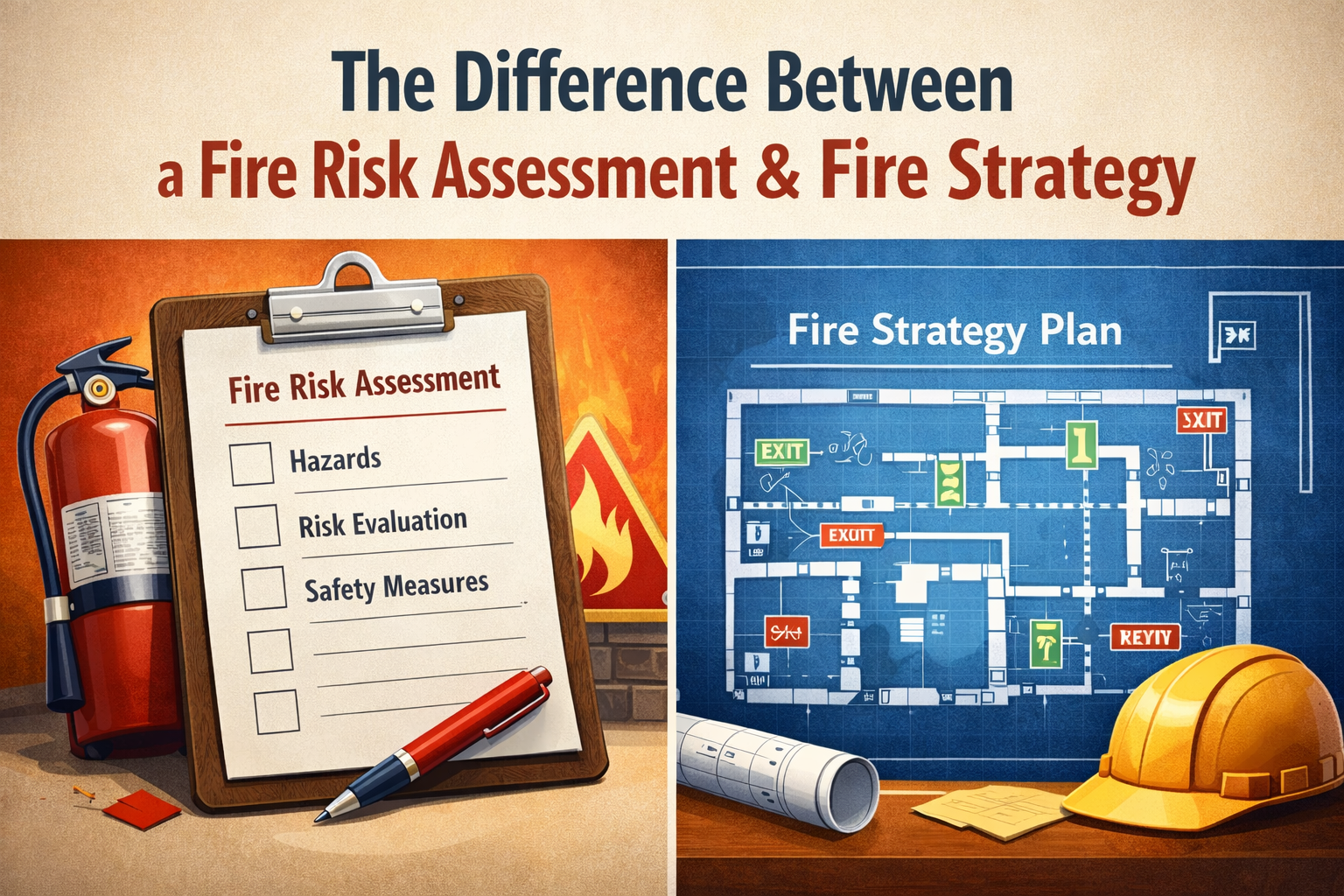
A fire risk assessment is a thorough examination of fire hazards within a building. Under the Regulatory Reform (Fire Safety) Order 2005, most non-domestic premises in England and Wales must have a record of this, and it must be arranged or conducted by a ‘Responsible Person’ (usually the building owner, employer or facilities manager). The 'Responsible Person' needs to identify potential fire hazards and determine who might be at risk. They don’t necessarily have to do the assessment themselves, but are legally liable for ensuring it gets completed correctly.
Fire risk assessments need to be reviewed regularly, especially after any notable changes to the building layout or use, as these can introduce new hazards or render existing escape routes ineffective.
After an assessment, an action plan is created, outlining any necessary changes. This might include actions like improving signage, replacing fire doors, providing staff training or changing how materials are stored. Your action plan will be unique to your premises.
What Is a Fire Strategy?
A fire strategy differs from a fire risk assessment in that it examines how the building itself is designed to contain and manage fire. This document is required for many types of new builds, buildings over 18m or 7 storeys and major refurbishment projects as part of Building Regulations compliance. It describes the passive and active fire protection measures built into the structure itself. This includes features like fire-resistant walls, compartmentation, protected escape routes, sprinkler systems and smoke ventilation.
The strategy looks specifically at how these elements work together. For example, it might outline how fire-resistant compartments prevent fire spread between floors, how protected stairwells allow safe evacuation or how fire stopping prevents flames and smoke from travelling through service penetrations.
Unlike a risk assessment, which focuses on identifying hazards, a fire strategy report demonstrates that the building's design meets the functional requirements of Approved Document B (the fire safety section of Building Regulations). It's prepared by fire engineers or suitably qualified consultants during the design phase and updated as construction progresses.
For existing buildings, you might not have a formal fire strategy unless the building has undergone recent major works. However, understanding how your building is designed to manage fire becomes increasingly important as buildings age and undergo modifications.
Is a Fire Safety Assessment Legally Required?
In most cases, yes. Since the Grenfell Tower fire, enforcement of fire safety compliance has increased significantly. Fire and rescue authorities are conducting more inspections, and penalties for non-compliance have become more severe.
You’ll need a written fire safety assessment if:
- You are a business owner or employer: Regardless of size, all businesses must now document their full assessment.
- You manage residential common areas: This applies to blocks of flats, maisonettes and HMOs.
- You provide holiday accommodation: Even small ‘paying guest’ lets are now strictly regulated.
- You are the ‘Responsible Person’ for a new build: This is a core part of the building regulations approval process.
- You’re conducting a refurbishment: Specifically any works that affect fire doors, escape routes or compartmentation.
Fire inspectors aren't just checking if you know your fire risks; they want to see an audit trail. The law now requires you to record not just significant findings, but the entire assessment and the identity of the person who carried it out.
How Fire Safety Documents Work Together
By combining a fire strategy with a fire risk assessment, you can be confident that you’re covering all bases when it comes to keeping occupants safe.
Your fire strategy sets out how the building should perform in a fire and describes the designed-in protection measures. Your fire risk assessment then evaluates whether those measures are being maintained and whether operational practices might compromise them.
For example, your fire strategy might specify that a particular wall provides 60 minutes of fire resistance. Your fire risk assessment should check that subsequent modifications haven't breached this protection. Have cables been run through without proper fire stopping? Has someone propped open a fire door for convenience? These are easy-to-miss considerations that risk assessments catch.
When you understand what your building is designed to do, you can make better decisions about what needs checking and maintaining in your risk assessment.
When to Review and Update Your Fire Safety Documentation
Your fire risk assessment needs reviewing whenever significant changes occur. If you bring in new equipment, alter internal layouts or increase the number of occupants, you need to ensure that it’s not putting anyone at risk. To be on the safe side, it’s best practice to review your assessment annually, even if nothing obvious has changed. Small modifications can accumulate over time, and your initial intentions for how the building would be used may have changed.
When it comes to fire strategies, updates are required if you undertake building work that affects fire safety provisions. This includes adding new floors or extensions, changing structural elements, altering means of escape or modifying fire protection systems. If you're planning significant works, it’s best to involve a fire safety consultant early, as you’re always better protected by incorporating fire safety features from the very start.
Did you know? Recent changes to building regulations mean that some older fire strategies may no longer meet current standards. The introduction of the Building Safety Act has raised expectations around documentation quality and competence. If your fire strategy is more than a few years old and predates recent regulatory changes, it’s best to book in for a review.
Get Expert Support from Highland Services
Need a helping hand? At Highland Services, our industry-accredited team works with commercial property owners to ensure fire safety compliance across both strategic design and operational practice. We understand that fire safety isn't just about meeting minimum legal requirements but creating genuinely safe environments for the people who use your buildings.
Whether you need support with fire risk assessments, advice on maintaining fire safety systems or guidance on how building modifications might affect your fire strategy, we’re here to help. Get in touch with our team to discuss your requirements.