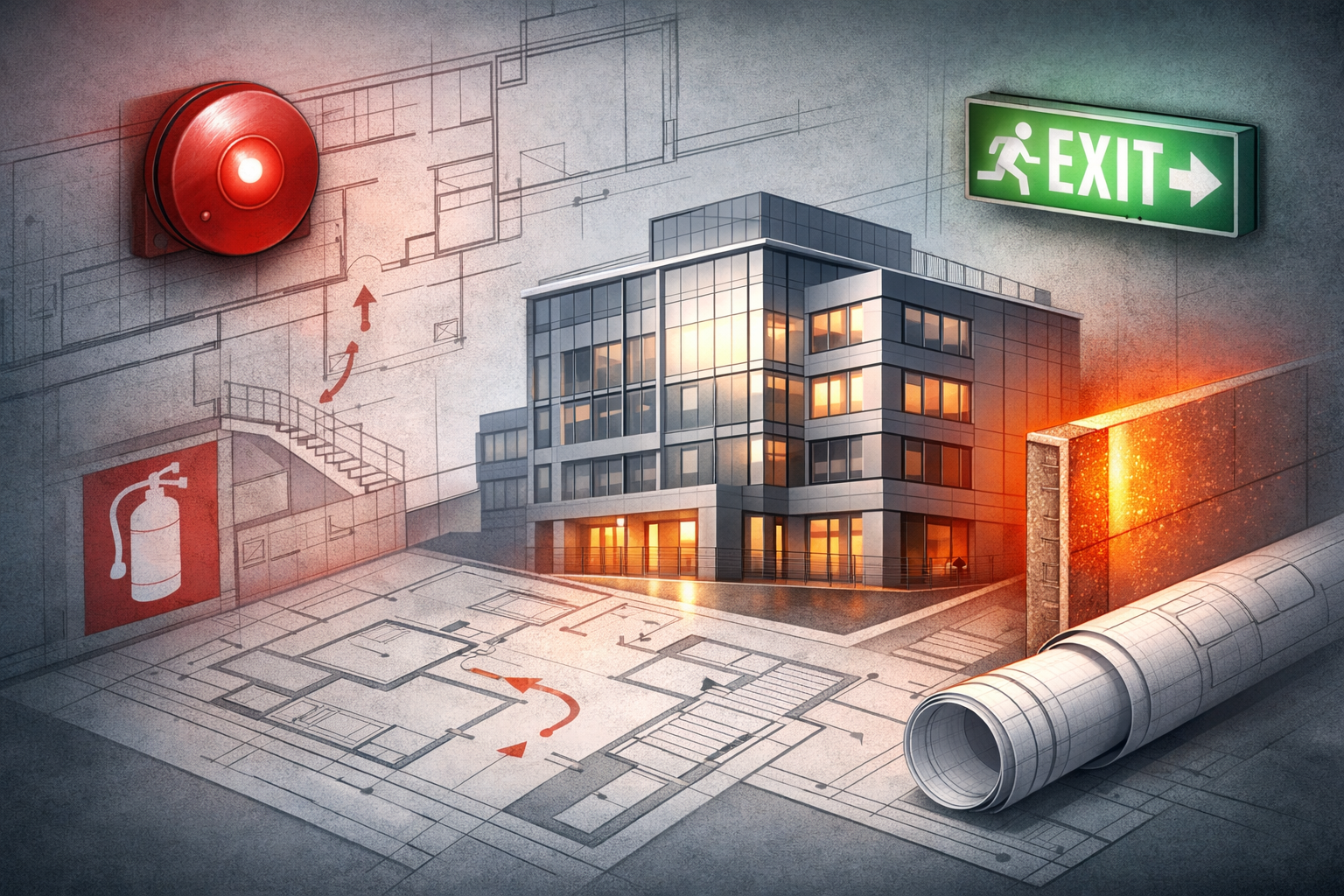
A fire strategy is a fundamental document that outlines how fire safety has been considered and integrated into a building's design, construction, and ongoing use. It addresses key aspects such as means of escape, fire spread prevention, and the safety of occupants and emergency responders.
This report isn’t just useful – it’s a formal requirement under UK building regulations for many types of buildings, particularly commercial premises, residential blocks, and complex structures. Without a compliant fire strategy in place, gaining approval for new builds or significant refurbishments becomes very difficult.
What Does a Fire Strategy Cover?
A fire safety strategy, sometimes called a fire strategy report, provides a clear plan for how a building will meet all relevant fire safety regulations in the UK. It includes:
- Means of escape and evacuation routes
- Compartmentation and fire-resisting construction
- Fire detection and alarm systems
- Firefighting access
- Smoke control systems
- Considerations for disabled access and evacuation
The report also references Approved Document B, which offers detailed guidance on meeting the requirements of Part B of the UK Building Regulations – the section focused on fire safety.
Why Is a Fire Strategy Required?
UK building regulations require a fire strategy to ensure that fire safety has been properly thought through from the outset. It’s not enough to install alarms and sprinklers at the end of a project. Fire safety must be built into the structure and layout of the building from day one.
Local authorities and building control bodies rely on a fire strategy report to confirm that your building complies with fire safety legislation. In many cases, it's also used by architects, engineers, and fire consultants throughout the design and build stages to guide decisions and avoid costly changes later on.
Failure to provide a suitable fire strategy can lead to delays in planning approval, enforcement notices, and even prosecution in severe cases.
When Do You Need a Fire Strategy Report in the UK?
A fire strategy is typically required:
- For all new commercial builds
- When converting or extending existing buildings
- For buildings that have complex layouts or mixed-use spaces
- For high-rise residential buildings
It may also be necessary after significant changes in occupancy or internal layout, to ensure ongoing compliance with fire safety regulations in the UK.
Who Prepares a Fire Strategy?
A fire strategy consultant in the UK is responsible for producing a detailed, compliant report. These consultants assess the building layout, intended use, fire risks, and relevant building regulations before developing a strategy that aligns with both safety requirements and practical use of the space.
At Highland Services, our fire safety consultants work closely with property developers, architects, and business owners to develop comprehensive fire strategy reports. From early-stage planning through to post-occupancy assessments, we help ensure every building we work on is safe, compliant, and fit for purpose.
We also provide a full range of fire safety services, including fire alarm systems, emergency lighting, and fire extinguisher installation – all in line with current UK legislation.
Why It Matters
A fire strategy isn’t just a box to tick for compliance. It’s a safeguard for people, property, and business continuity. With regulations constantly being updated, staying ahead of fire strategy requirements in the UK is vital for legal compliance and peace of mind.
If you're planning a project or need advice on your existing building, speak to our fire safety team at Highland Services. We’ll guide you through the process, prepare your fire strategy report, and provide the systems you need to stay compliant.