If you run a business or manage a property in South Wales, understanding fire risk assessment UK requirements is essential. The law is clear, and enforcement is strict. From Bridgend to Cardiff, Newport to Swansea, every commercial premises must take fire safety seriously.
At Highland Services, we support businesses across South Wales with compliant, practical fire safety solutions that protect people and property.
Quick definition:
A fire risk assessment is a legal process required in the UK that identifies fire hazards, evaluates risk, and outlines actions to protect people and property.
What Is a Fire Risk Assessment?
A fire risk assessment is a structured review of a building to identify fire hazards and reduce risk.
It ensures your premises meet UK fire safety laws and helps prevent fires, protect lives, and minimise damage.
Is a Fire Risk Assessment a Legal Requirement in the UK?
Yes, under the Regulatory Reform (Fire Safety) Order 2005, all non-domestic premises must have a fire risk assessment.
This applies to businesses, landlords, and property managers. You must regularly review and update it to stay compliant.
For deeper guidance, see our insights on fire strategy planning and Regulation 38 compliance.
If you're unsure how a fire risk assessment differs from a fire strategy, read our guide on the difference between a fire risk assessment and fire strategy.
Who Is Responsible for a Fire Risk Assessment?
The Responsible Person is legally required to ensure a fire risk assessment is carried out.
This is usually:
- The employer
- The building owner
- The landlord
- The managing agent
They must make sure the assessment is completed and acted upon.
What Does a Fire Risk Assessment Include?
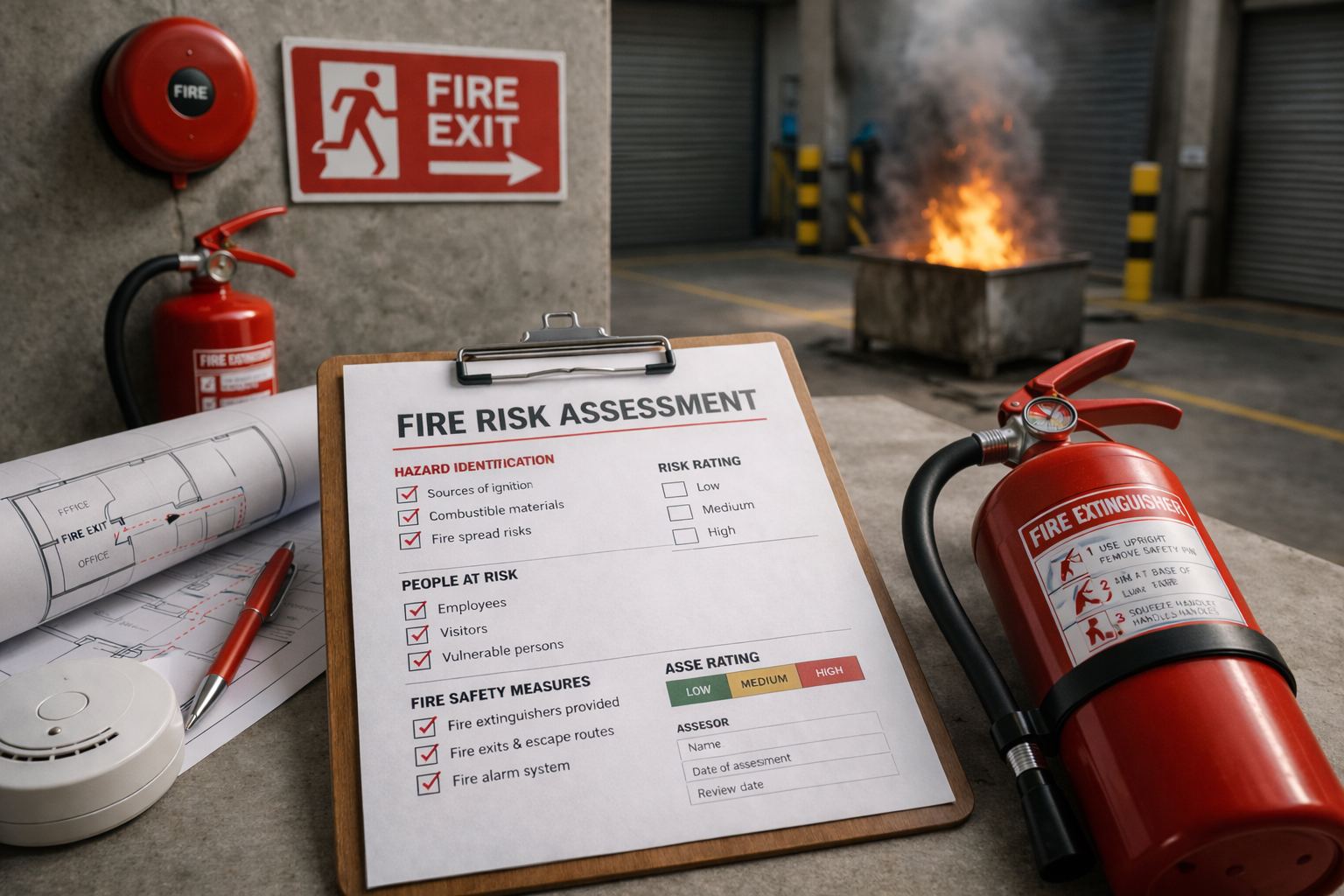
A fire risk assessment typically includes:
- Identifying fire hazards
- Identifying people at risk
- Evaluating risks and reducing them
- Recording findings and actions
- Reviewing and updating regularly
It also considers fire doors, escape routes, alarms, and compartmentation. Learn more in our fire door regulations guide for property owners.
What Are the 5 Steps of a Fire Risk Assessment?
The standard process follows five clear steps:
- Identify fire hazards
- Identify people at risk
- Evaluate and reduce risks
- Record findings and implement measures
- Review and update regularly
This structured approach ensures nothing is missed.
How Often Should Fire Risk Assessments Be Reviewed?
Fire risk assessments should be reviewed regularly and updated when significant changes occur.
This includes:
- Changes in building layout
- New equipment or processes
- After a fire incident
- Changes in occupancy
Most businesses review annually as best practice.
What Happens If You Don’t Have One?
Failing to carry out a fire risk assessment can lead to fines, prosecution, or even imprisonment.
Fire authorities can issue enforcement notices or shut down unsafe premises. More importantly, you put lives at risk.
Fire Risk Assessments and Your Fire Safety Systems
A fire risk assessment highlights gaps in your fire protection. From there, action is required.
At Highland Services, we support with:
- Fire stopping to prevent fire spread
- Fire door installation for safe escape routes
- Fire security systems to detect and alert early
We also provide retrospective fire strategy reports and help align your building with Regulation 38 requirements.
Commercial Fire Risk Assessments in South Wales
We deliver fire risk assessment services across:
Our team works with businesses, landlords, and developers to provide clear, compliant, and practical fire safety solutions.
We don’t overcomplicate things. We give you exactly what you need to stay compliant and protected.
FAQs
Is a fire risk assessment a legal requirement UK?
Yes. UK law requires all non-domestic premises to have a fire risk assessment under the Fire Safety Order 2005.
Who can carry out a fire risk assessment?
A competent person with sufficient training and knowledge can carry it out. Many businesses choose specialists for accuracy and compliance.
How often should a fire risk assessment be reviewed UK?
It should be reviewed regularly, typically every year, or sooner if significant changes occur.
What does a fire risk assessment include?
It includes identifying hazards, assessing risk, recording findings, and reviewing safety measures.
Need a Fire Risk Assessment in South Wales?
If you’re unsure about your legal obligations or need a reliable fire risk assessment UK provider, we can help.
Highland Services works with businesses across Bridgend, Cardiff, Newport, and Swansea to deliver clear, compliant fire safety support.
Get in touch today to arrange your assessment and protect your premises.